Field research that redirected a smart cart roadmap
Shadowing and interviewing 75 shoppers in Danish supermarkets, then turning what we found into hardware and software changes
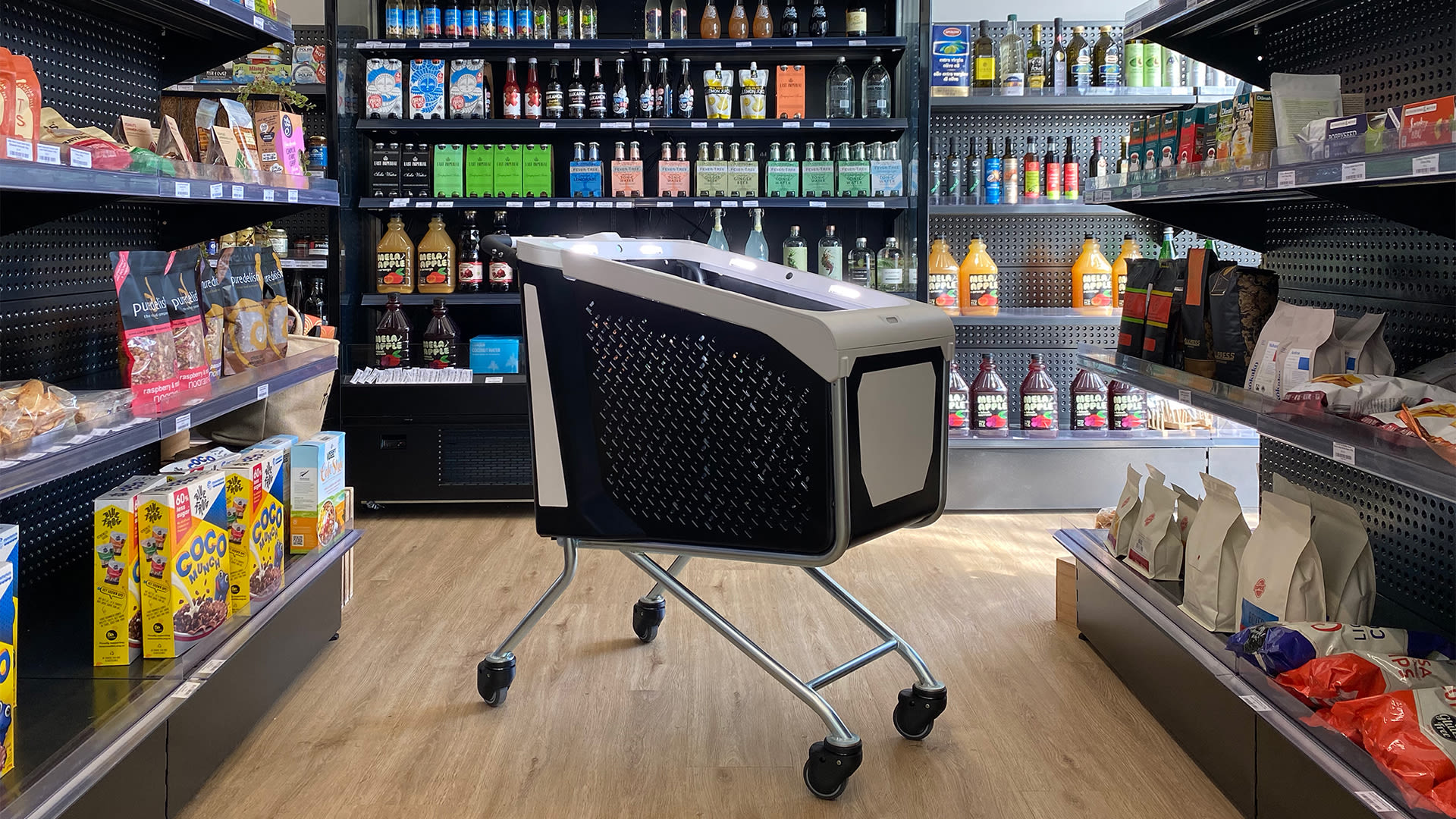
A product people had to learn in a supermarket aisle
Imagr builds computer vision hardware that turns a supermarket trolley into a checkout. Cameras on the cart recognise products as shoppers drop them in, a paired phone shows the running basket, and the shopper walks out without queueing.
In 2022 the carts were live in three stores of a Danish supermarket chain, running inside the retailer's own loyalty app. The technology worked. Adoption did not. Shoppers picked up a cart, hit something confusing, and either fought through it or gave up and went to a normal checkout.
I was Lead UX/UI Designer at Imagr and owned the experience across both the cart and the app. Nobody could say why shoppers were dropping out, because nobody had watched them do it. So I set up a study to go and watch.
Two weeks in three stores, watching people shop
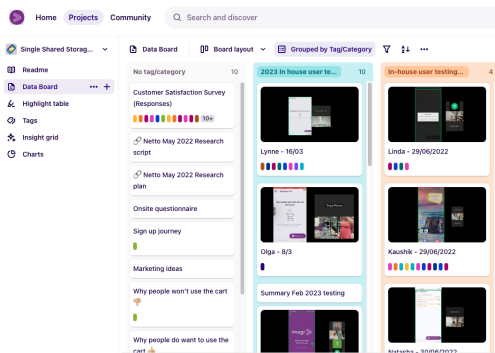
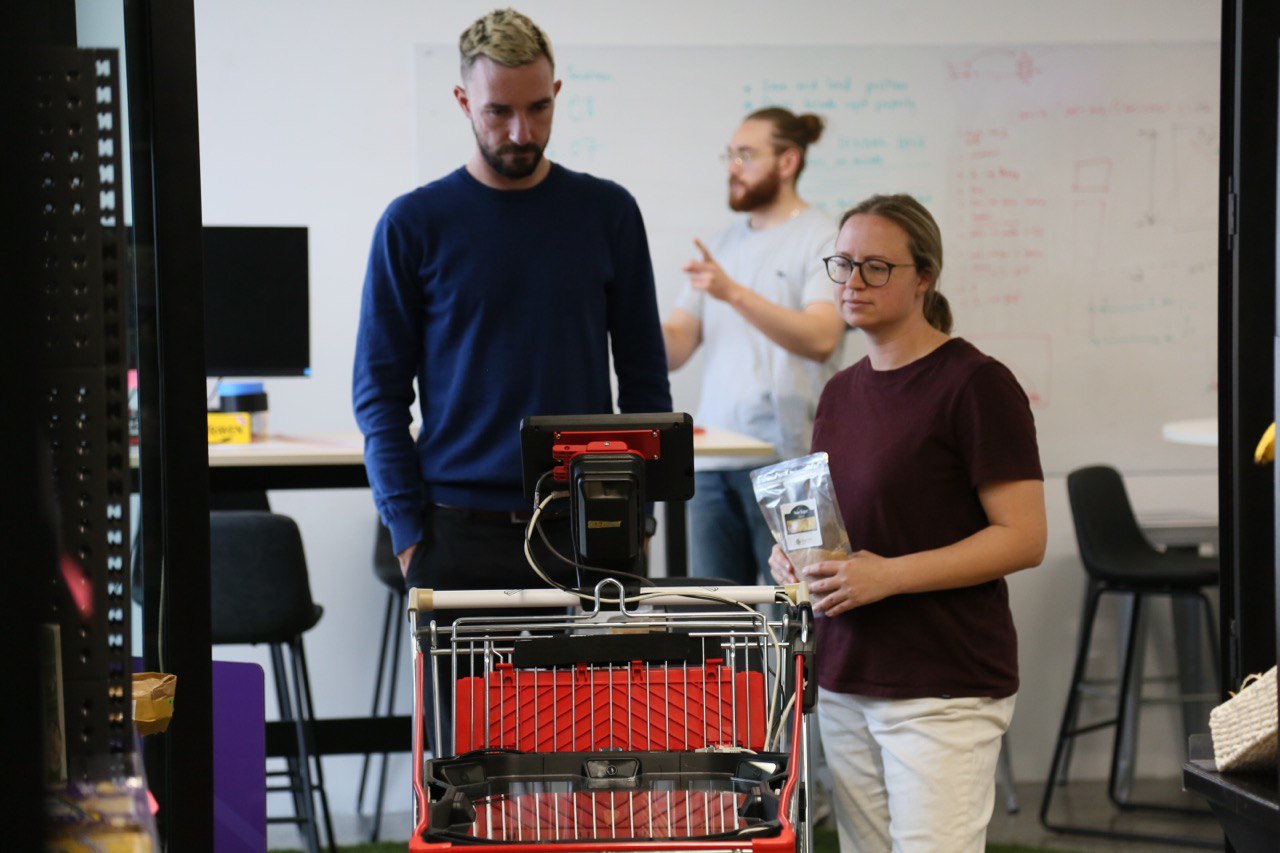
The study ran across June and July 2022 in three stores picked for different catchments: a blue-collar suburb, a wealthier one, and a middle-class one. Helle Martens, a Copenhagen researcher with twenty years in the field and founder of UX Copenhagen, ran the sessions on the ground. We shadowed 75 shoppers using the cart without interrupting them, then ran 30 semi-structured interviews with those willing to talk. Sessions were recorded in Danish, transcribed into English, and tagged in Dovetail.
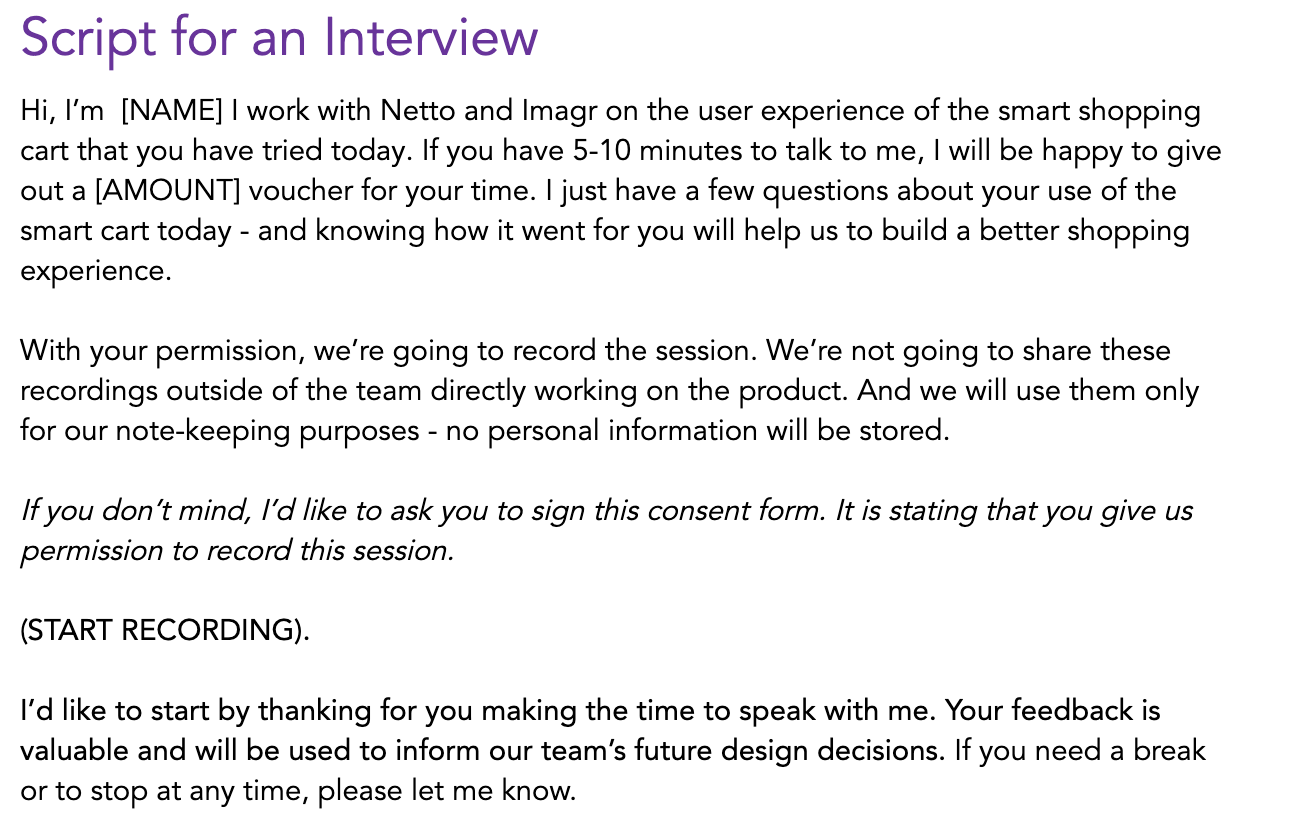
"I prefer to have contact with the cashier, even if there is a queue."
Three places the trip broke down
Three failures accounted for most of what went wrong, and they arrive in the order a shopper meets them.
Twenty sign-up steps before the first item
Shoppers new to the retailer's app had to create an account, add a card, and verify it while standing in the fruit and vegetable aisle. Two separate sign-up flows added up to twenty steps. Around a third of everyone who tried a cart hit that wall at the exact moment they were deciding whether it was worth it.
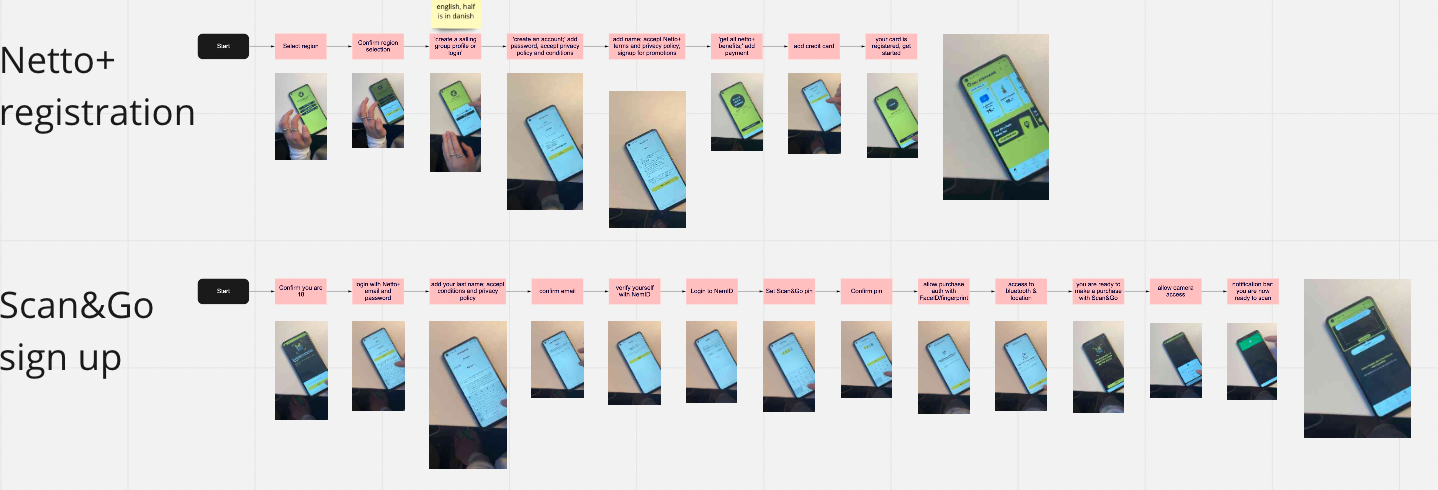
No mental model, so shoppers watched the screen instead of shopping
People had no idea how the cart decided what had gone in. With nothing to go on they checked their phone after every item, or stood still waiting for it to appear. Bagging as you go was genuinely loved. Almost everything around it created hesitation.
Barcode scanning was where trips fell apart
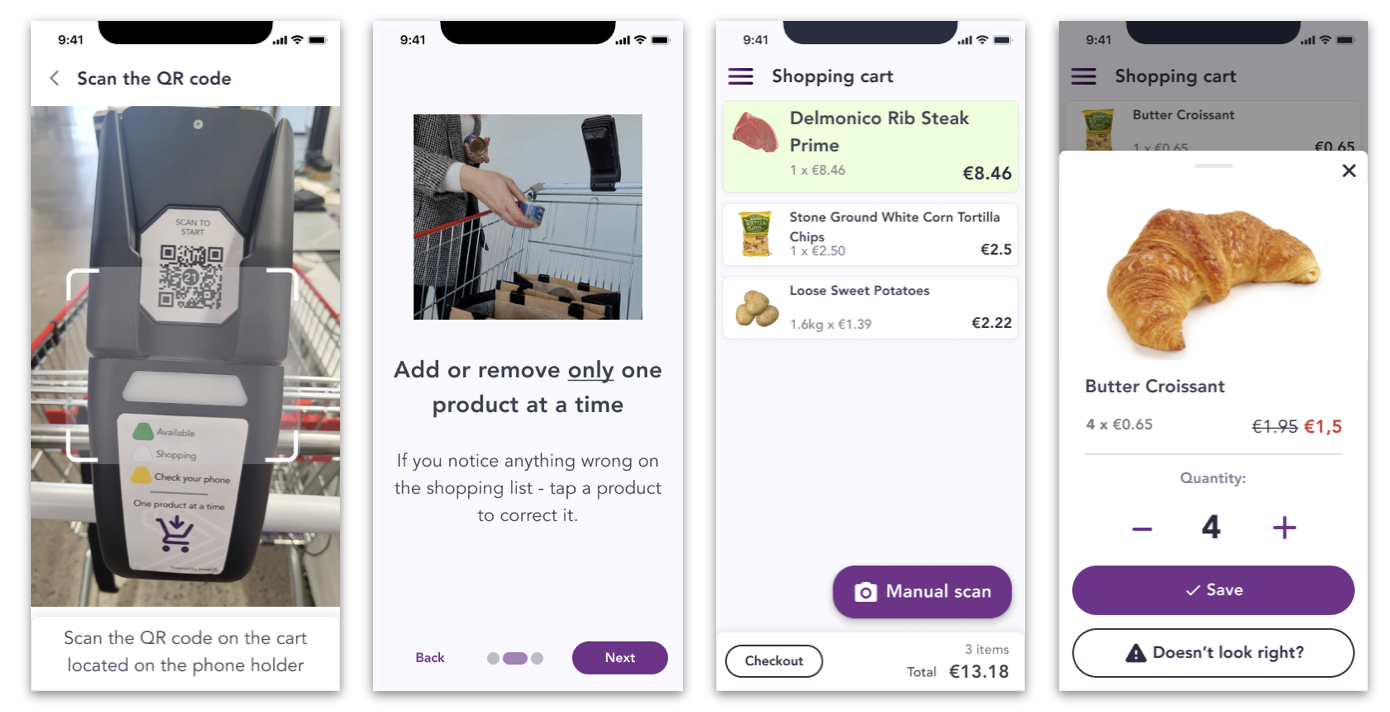
When the cart missed an item it paused and asked for a manual scan. Nothing in the lights, sounds, or app made it clear the cart had stopped. Unknown items could not be deleted, only resolved, and they moved position in the list so shoppers could not tell which one was the problem. That cascade was the single biggest cause of abandonment.
Shoppers did not mind the learning curve
Not everything pointed the same way. Shoppers expected the cart to get easier on the second or third trip and were relaxed about that. The problem was never that it was hard to learn. It was that nothing told them what the cart was doing while they learned.
"This is a great way to skip the long queue for anyone that isn't afraid of using tech."
The cart worked. The experience around it did not. Shoppers did not need a better algorithm, they needed to know what the cart was doing, and a way out when it got something wrong.
What the findings changed
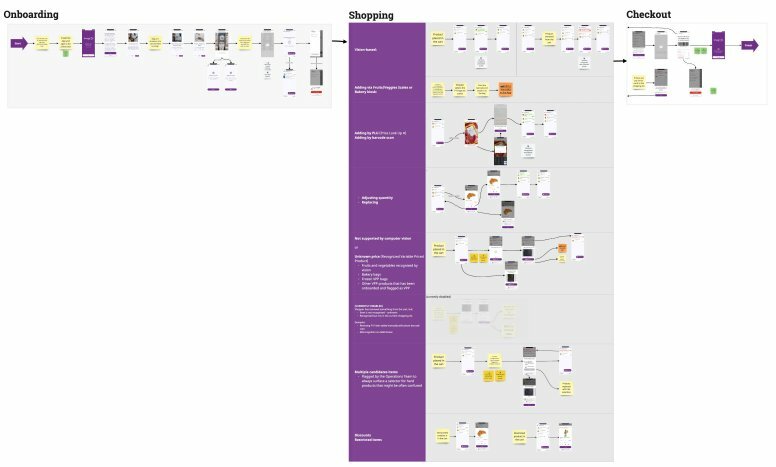
The report went to product and engineering leads and reset the roadmap for the following year. These were the three biggest shifts.
Sign-up removed entirely
No account, no card registration, no data entry on first use. Twenty steps went to zero.
The app came back in house
Ownership moved off the retailer's tech team and back to Imagr, so the feedback loop could actually be fixed.
Cameras started showing their work
Raw shots from the cart's cameras now appear in the app, so an unknown item becomes something a shopper can see and resolve.
What the study produced
Findings fed directly into hardware and software decisions for the next generation of cart, including the move to an on-cart tablet screen. The next deployment ran with a grocery partner in Portugal in mid-2023.
Sign-up steps on first use, down from 20
Would use the cart again
Let's chat
I’m always open to meeting fellow designers, product leads, or anyone passionate about the intersection of design and technology.